
Most drivers change their oil on schedule but forget that the engine also needs to breathe clean air to run efficiently. A clogged or dirty air filter forces the engine to pull in air through a restricted opening, which can quietly chip away at performance, fuel economy, and even long-term engine health. For anyone unsure where to start, an auto engine air filter buying guide is a practical first step before heading to a repair shop or ordering parts online.
Unlike more complex repairs, air filter maintenance is one of the few services a car owner can genuinely handle without special tools or mechanical experience.
Why Engine Air Filters Matter
The engine air filter sits between the outside air intake and the engine itself, trapping dust, pollen, sand, and debris before they can reach sensitive internal components. Without this barrier, contaminants would gradually wear down cylinder walls and other moving parts, shortening engine life considerably.
Airflow and Combustion Efficiency
A clean filter allows the engine to draw in the right volume of air for proper combustion. When the filter becomes clogged, the air-to-fuel ratio shifts, which can lead to rougher idling, hesitation during acceleration, or in some cases a lit check-engine light.
Signs Your Air Filter Needs Replacement
A few warning signs usually appear well before the filter causes serious problems:
- visibly dark, dirty, or oil-stained filter material instead of the original off-white or tan color;
- reduced acceleration or a noticeable loss of engine power, especially under load;
- unusual engine noises or a rough idle that wasn’t there before;
- a check-engine light triggered by an unbalanced air-fuel mixture;
- a faint fuel smell or slightly lower gas mileage over time.
None of these signs alone confirms a bad filter, but taken together they’re a strong reason to pop the hood and take a look.
A Quick Visual Check
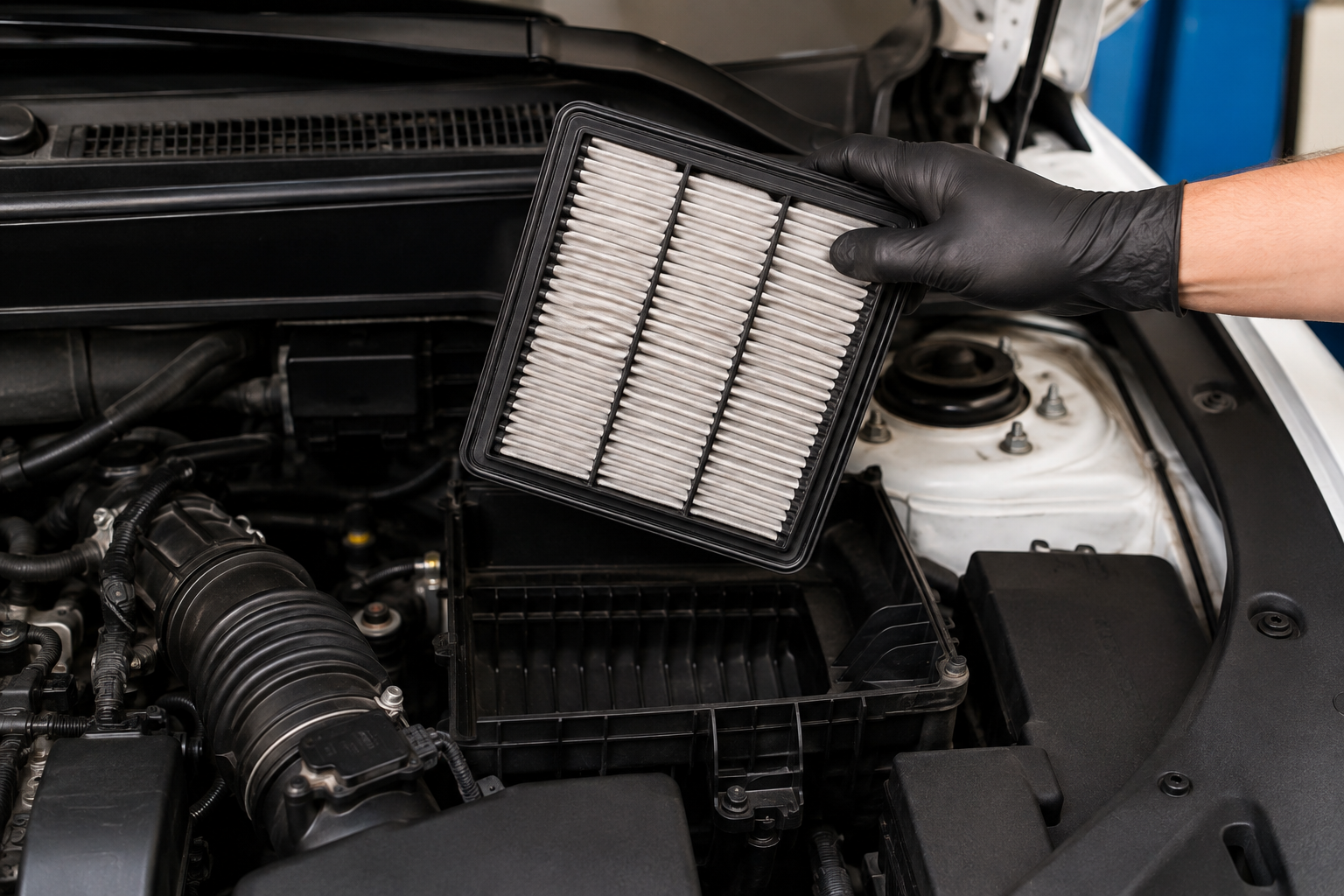
Most engine air filters sit in a plastic housing that opens with a few clips or screws, making inspection a five-minute job. If the filter looks heavily loaded with debris or has visible tears, it’s time for a replacement rather than an attempt to clean it.
How Often Should You Replace It
Manufacturer guidance typically falls somewhere between 15,000 and 30,000 miles under normal driving conditions, though the exact number varies by make and model. Drivers who spend a lot of time on dusty rural roads or in heavy stop-and-go traffic should plan on shorter intervals, since those conditions load the filter faster than average commuting.
Mileage Is a Guideline, Not a Rule
The owner’s manual gives a starting point, but actual filter condition matters more than the odometer reading. A filter that still looks clean at 20,000 miles doesn’t necessarily need replacement just because a general guideline suggests it, and one that’s heavily clogged well before that point should be swapped regardless of mileage.
Choosing the Right Filter for Your Vehicle
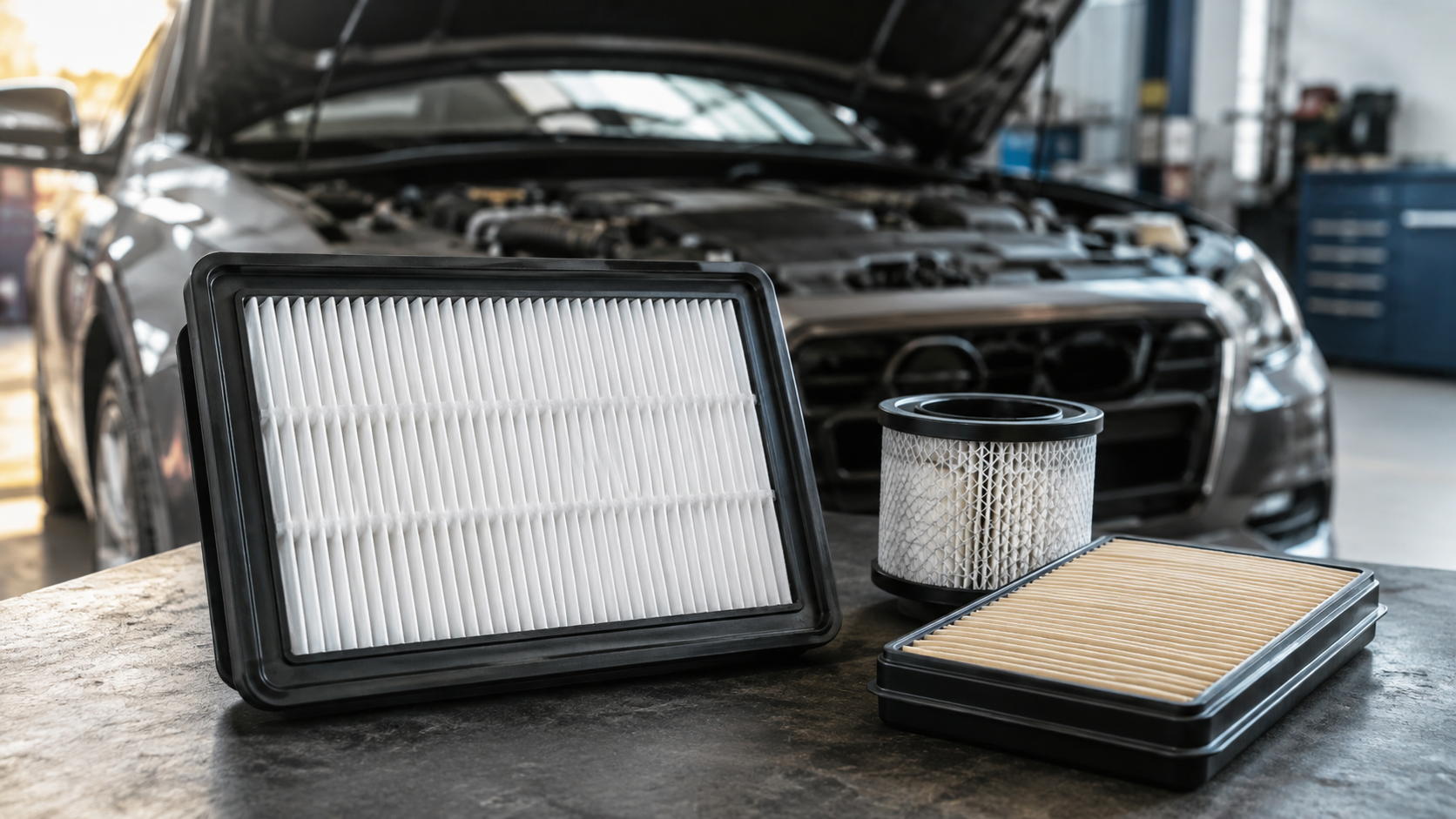
Not every filter fits every car, and getting the wrong part can mean a poor seal or reduced airflow even if it technically fits the housing.
Toyota Owners
Toyota models each use specific filter dimensions and mounting configurations depending on the engine and model year. Reliable replacement air filters for Toyota Vehicles are built to match OEM specifications, so the fit and seal perform the same way the original equipment did.
Nissan Rogue Owners
The Nissan Rogue has its own housing shape and filter profile that differs from other Nissan models in the lineup. A premium engine air filter for Nissan Rogue owners should match those exact dimensions to avoid air leaks around the edges, which can let unfiltered air bypass the filter media entirely.
Mechanics often note that a poorly seated filter causes more airflow problems than a moderately dirty one, since even small gaps around the edges let unfiltered air straight into the engine.
Keeping the engine air filter clean is one of the simplest and most cost-effective parts of routine car maintenance. A quick visual inspection every few months, paired with a properly fitted replacement when needed, helps the engine run the way it was designed to.